

Water Well Drilling & Pump Repair in Santo, TX | DFW Well Service
Service Area Overview
Water well drilling and pump service in Santo and Palo Pinto County. Pennsylvanian Cross Timbers Aquifer, modest yields, no groundwater district.
Services We Provide in Santo
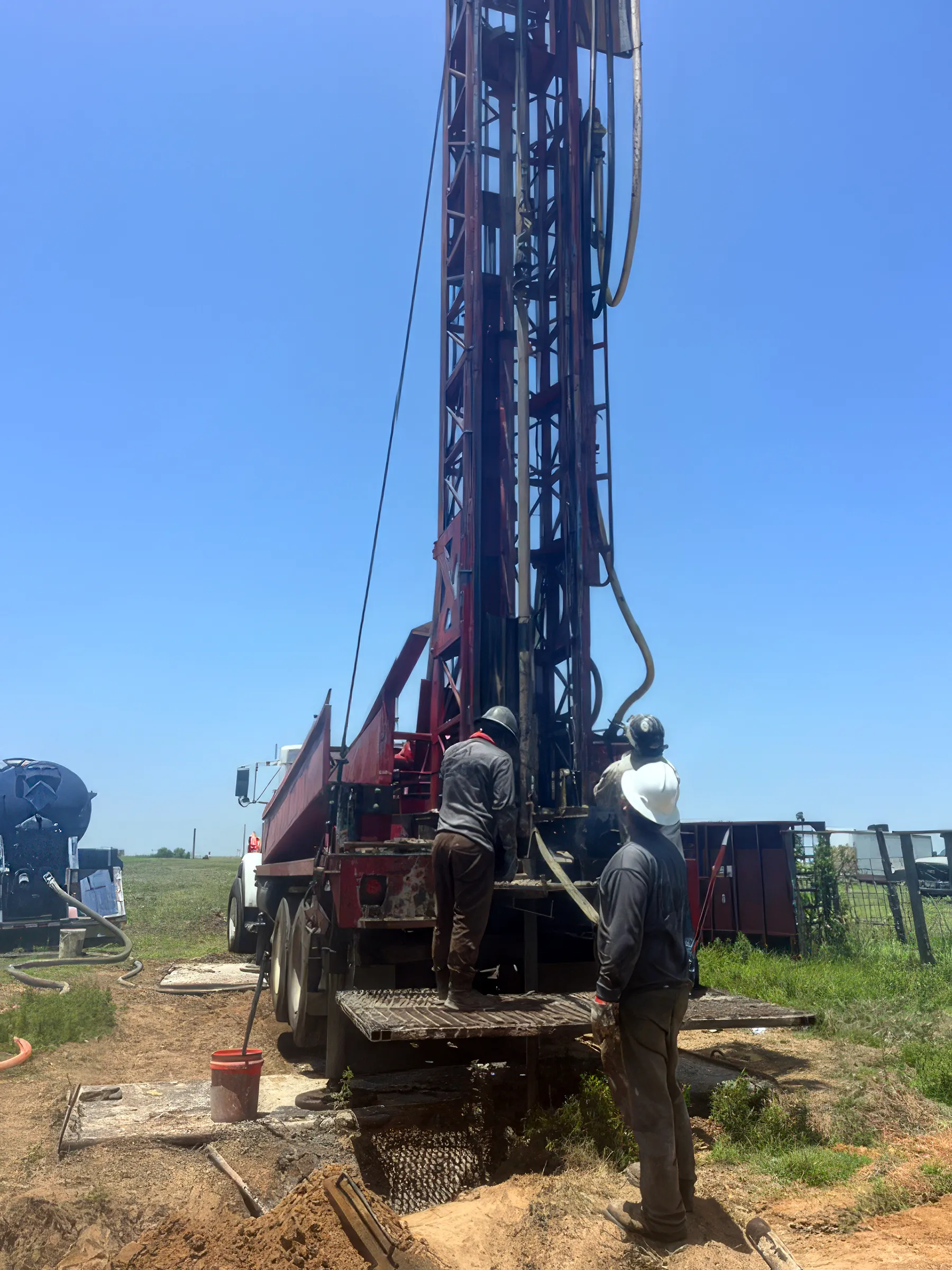
DFW Well Service provides water well drilling, pump repair, and inspection in Santo and throughout Palo Pinto County. Santo sits in the ranch and acreage country of southeastern Palo Pinto County, along US Highway 180 near the Brazos River, where the region’s Pennsylvanian-age bedrock — older than the Cretaceous Trinity that supplies most of North Texas — defines what it takes to drill a good well. The water here comes from the Cross Timbers Aquifer, not the Trinity, and that changes how a well gets drilled, how deep it goes, and what you can expect for yield.
Well Depth & Geology in the Santo Area
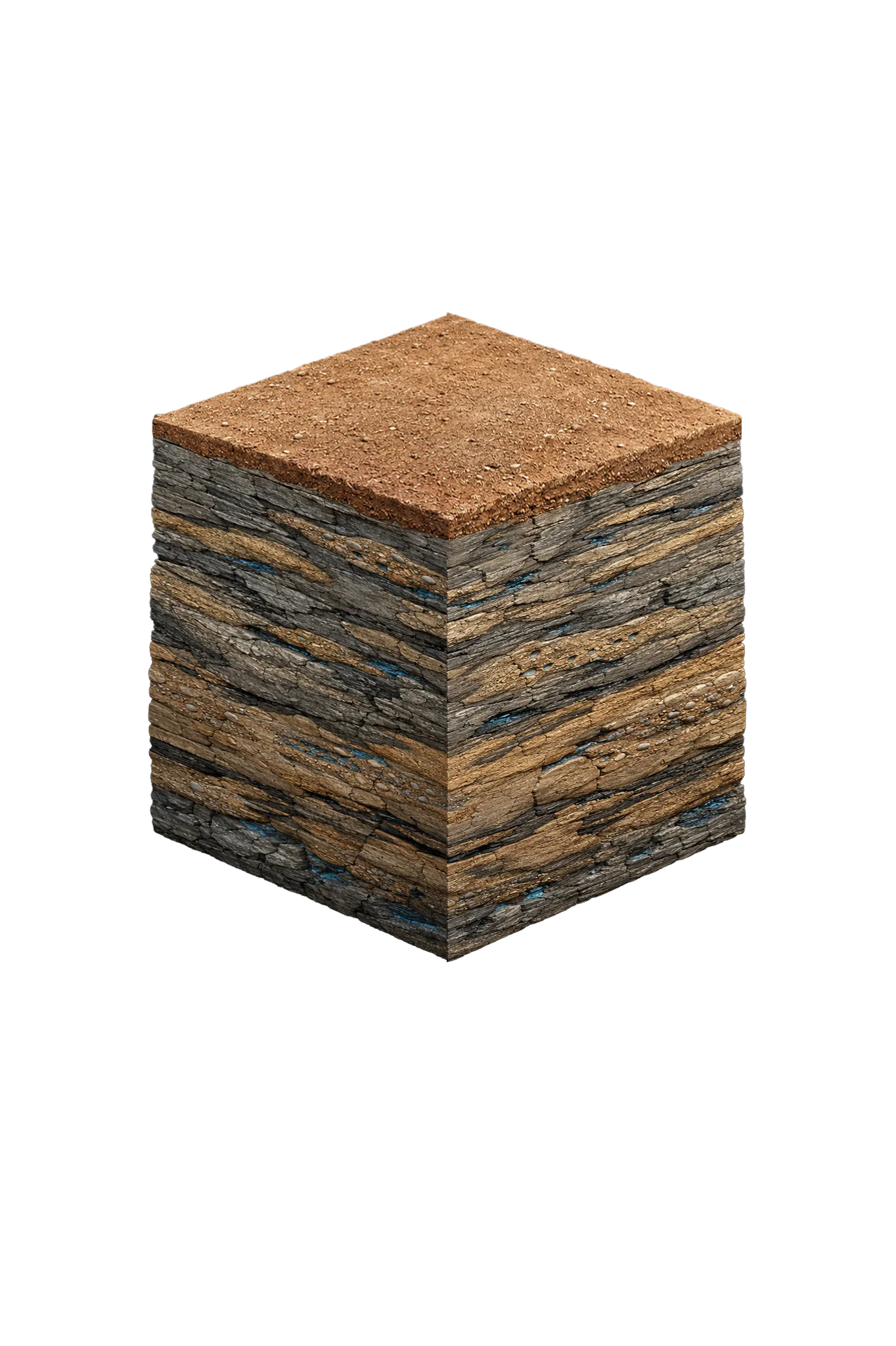

About this diagram
This cross-section shows the rock layers beneath Santo from topsoil down to the Cross Timbers Aquifer.
Tap any layer in the cube — or in the list below — to see what it is and what it means for drilling a well here.
- Topsoil — Cross Timbers0–15 ft
- Pennsylvanian Canyon Group (limestone, shale, sandstone/conglomerate lenses)15–250 ft
- Pennsylvanian Strawn Group (sandstone, conglomerate, shale, thin coal)250–450 ft
This shows the layer stack typical of the Santo area. The exact formations and depths under a specific property vary — see the details above.
- Primary Aquifer
- Cross Timbers Aquifer (Pennsylvanian)
- Typical Well Depth
- 100–450 ft
- Groundwater District
- No GCD — TDLR standards only
- Confinement
- Pennsylvanian bedrock; water in fractures and localized sand and limestone lenses
Secondary: Thin Trinity remnant on the far eastern edge (often brackish; not a routine target)
Palo Pinto County overview → Permit & regulations → TDLR License #61234 DKMPW Updated August 6, 2026
Palo Pinto County sits on Pennsylvanian-age bedrock — older rock than the Cretaceous Trinity that supplies most of North Texas. The water-bearing system here is the Cross Timbers Aquifer, made up of the Strawn Group and the Canyon Group: shale, limestone, sandstone, and conglomerate. Productive water comes from localized sandstone, conglomerate, fractured limestone, and lens-style sand bodies rather than from a single thick, continuous sand. That makes well results more variable from one property to the next than they are farther east.
Most residential wells in the county fall in a planning range of roughly 100 to 450 feet, though the Pennsylvanian beds dip to the west-northwest, so depths vary by location. Yields are typically modest — often under 20 to 45 gallons per minute — and dry holes do happen in areas dominated by tight shale. An experienced local driller who knows the fracture and sand patterns in your part of the county is worth more here than almost anywhere else in our service area.
Drilling cost in Palo Pinto County is harder to pin to a flat per-foot rate than in most areas, because wells here can hit dry zones or need to go deeper than expected depending on the local rock. We give a detailed free estimate after looking at your specific property and the well records nearby, rather than quoting a number that may not hold for your parcel.
Water Quality
Cross Timbers groundwater quality varies a lot across Palo Pinto County. Most sampled wells are fresh to slightly saline — median total dissolved solids around 839 mg/L — though chloride runs about twice the level of typical Trinity water. Water can be hard with elevated iron or manganese, and wells finished in the Strawn Group occasionally encounter stray gas. We recommend a water quality test after any new well so you know exactly what you’ve got.
Palo Pinto County Permit Requirements
No groundwater conservation district has jurisdiction in Palo Pinto County. There is no pre-drilling permit, no local well-spacing rule, no pumping limit, and no production reporting required by a district. Wells here are governed only by the state: wells must be drilled and equipped by TDLR-licensed professionals, and Texas Water Code Chapter 36 default rules apply. Palo Pinto County borders Parker County (Upper Trinity GCD) and Erath County (Middle Trinity GCD), but those districts stop at the county line — they do not cover Palo Pinto. Because there’s no local district, Texas common law governs groundwater, including the rule of capture, and a property owner has no local avenue to challenge a neighbor’s pumping. State well-construction standards still apply, and DFW Well Service builds every well to those standards.
For more on what this means for your project, see our guide to Palo Pinto County water well regulations.
DFW Well Service (TDLR License #61234 DKMPW) has the rigs and the Cross Timbers expertise for Palo Pinto County well drilling — and we’ll give you a straight read on whether a productive well is realistic for your tract before you commit. Call (940) 536-8560 for a free estimate.