

Water Well Drilling & Pump Repair in Kennedale, TX | DFW Well Service
Service Area Overview
Licensed well drilling and pump service in Kennedale and southeastern Tarrant County, reaching the deep, confined Trinity Paluxy and Twin Mountains sands.

Services We Provide in Kennedale
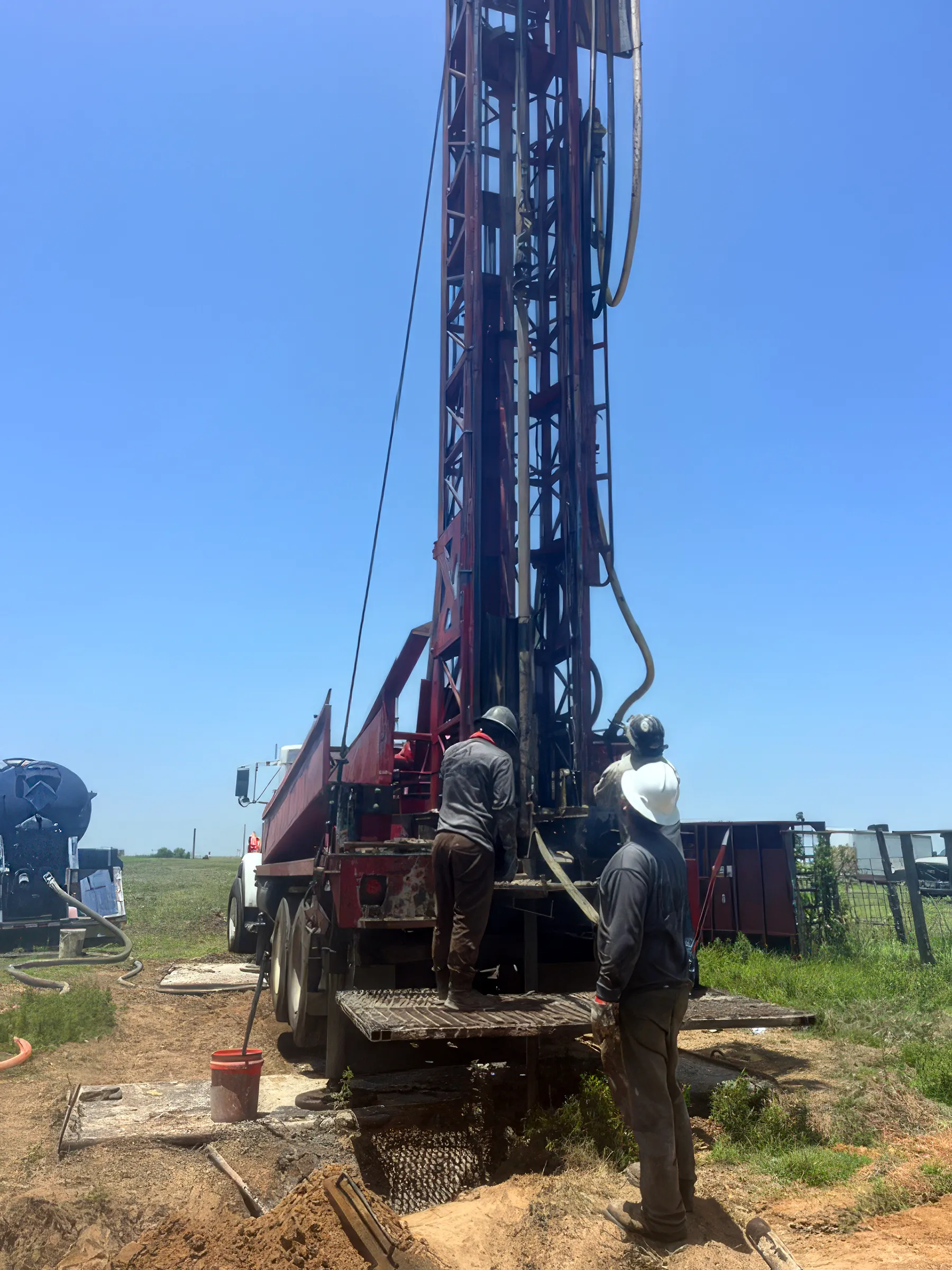
DFW Well Service (TDLR License #61234 DKMPW) provides full-service water well solutions in Kennedale and across southeastern Tarrant County. Our licensed team handles everything from new well drilling to routine pump maintenance for the larger-lot and semi-rural properties around town.
Well Depth & Geology in the Kennedale Area
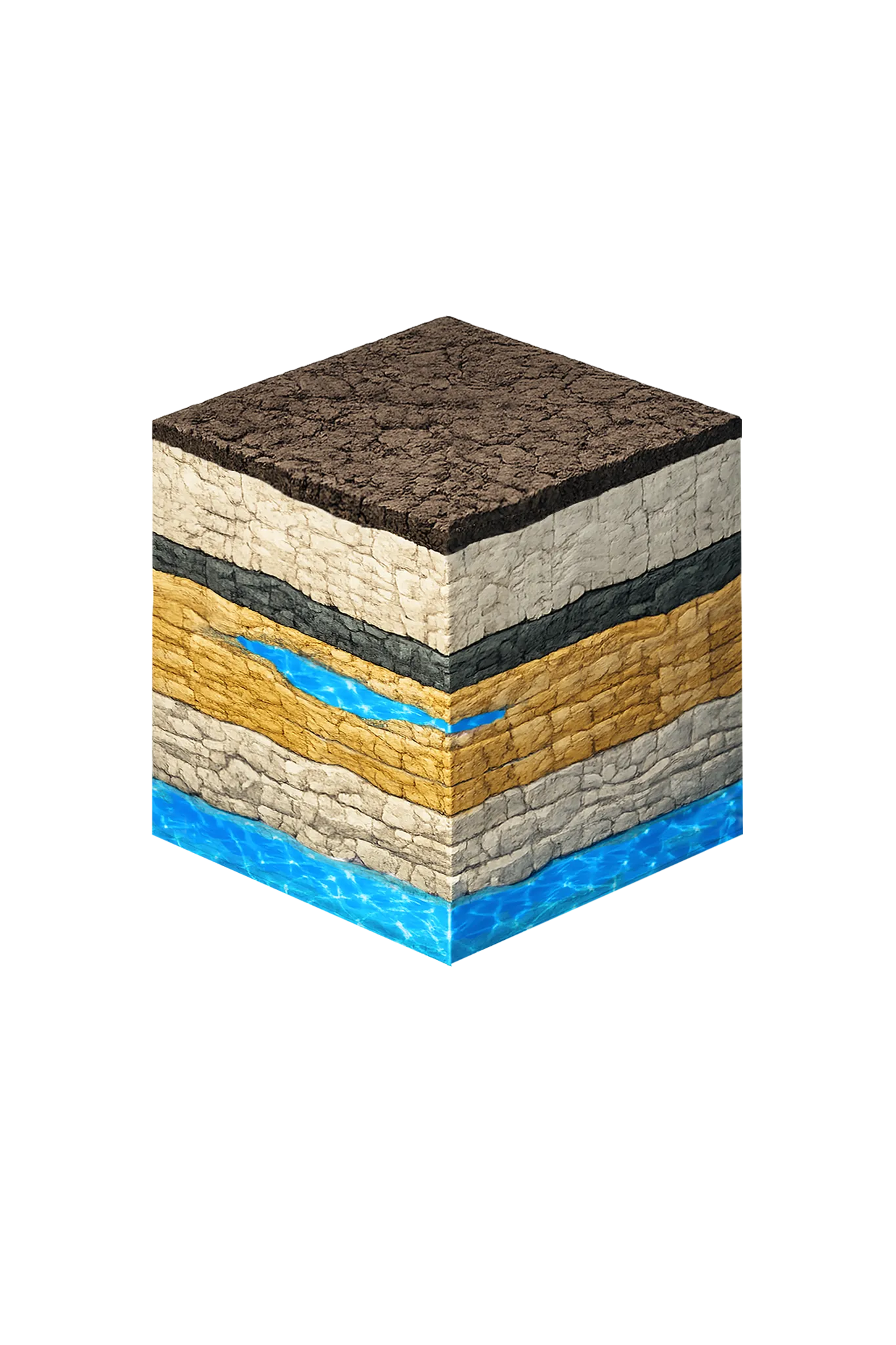

About this diagram
This cross-section shows the rock layers beneath Kennedale from topsoil down to the Trinity aquifer system.
Tap any layer in the cube — or in the list below — to see what it is and what it means for drilling a well here.
- Topsoil — Blackland Prairie / urban context0–10 ft
- Austin Chalk10–250 ft
- Eagle Ford Shale250–300 ft
- Paluxy Formation300–600 ft
- Glen Rose Formation600–800 ft
This shows the layer stack typical of the Kennedale area. The exact formations and depths under a specific property vary — see the details above.
- Primary Aquifer
- Trinity (Paluxy / Twin Mountains, separated by Glen Rose confining unit)
- Typical Well Depth
- Varies by location
- Groundwater District
- Northern Trinity GCD
- Confinement
- deep confined across most of Tarrant County; limited Trinity outcrop in the far northwestern corner
Secondary: Woodbine (eastern Tarrant County only)
We estimate from nearby well records
Tarrant County overview → Permit & regulations → TDLR License #61234 DKMPW Updated August 6, 2026
Kennedale sits in southeastern Tarrant County, between Fort Worth, Arlington, and Mansfield. Most of the town is on municipal water, with private wells found on the larger-lot and semi-rural tracts around the edges. It is worth being clear about the geology: the limited Trinity outcrop in Tarrant County is confined to the far northwestern corner, and here on the eastern side of the county the Trinity is deep and confined — among the deepest anywhere in Tarrant.
Wells here target the Trinity aquifer. Up high is the Paluxy Formation, a sand-dominant unit that lies at or near the surface only in the far northwest corner and deepens toward the east — countywide the Paluxy runs from surface to roughly 1,000 feet. Beneath it, separated by the Glen Rose limestone — which acts as a confining layer here, not a producer — are the Twin Mountains sands, the most productive Trinity unit, sitting roughly 500 to 2,000 feet and also deepening eastward. A minor Woodbine aquifer is present in the eastern Tarrant suburbs and supplies some household and livestock water, but its yields are lower and its water poorer than the Trinity.
Tarrant County Permit Requirements
Water wells in Kennedale and Tarrant County fall under the Northern Trinity Groundwater Conservation District (NTGCD), a single-county district created in 2007. A typical domestic household well — one not capable of producing more than 17.36 gallons per minute and used for household, livestock, or agricultural purposes — is exempt from permitting, metering, and production fees. Even so, every well drilled in the county must still be registered with the district. Larger, non-exempt wells require a permit before drilling. Our guide to Tarrant County water well regulations walks through the full process.
DFW Well Service handles the NTGCD registration and any permitting as part of your project. Call (940) 536-8560 for a free estimate on a new well or any pump and service work in Kennedale or southeastern Tarrant County.